
How to Create a Good Daily Exercise Routine That Fits Your Lifestyle: Personalized and Sustainable Fitness Planning
- Amanda Boike

- Nov 8, 2025
- 8 min read
By Amanda Boike Fitness

We've all been there - full of good intentions, eating well, hitting the gym everyday, and suddenly you completely fall off track. This on-again-off-again cycle is all too common. If you find that you struggle with maintaining a good daily exercise routine, you're not alone. The secret to consistency lies in these four steps.
The first crucial step, and perhaps the most empowering, is to identify consistent windows in your schedule, no matter how short, that you can reliably dedicate to movement. Think of it as finding little pockets of opportunity throughout your day. This personalized approach ensures your workout plan is built on a foundation of realism, making long-term adherence not just achievable, but genuinely enjoyable. It transforms sporadic, guilt-ridden efforts into consistent, meaningful activity that you look forward to.
Building a Balanced Daily Exercise Routine: Your Body Will Thank You!
A balanced and effective personalized workout plan incorporates both cardiovascular and strength training. These two pillars work together to build a strong, healthy, and resilient you.
Embrace Cardiovascular Health
For your heart and overall cardiovascular health, aim for at least 150 minutes of light-to-moderate intensity exercise, or 75 minutes of vigorous exercise, per week. If you're starting from zero, don't let those numbers intimidate you! This could be something as simple and accessible as brisk walking in your neighborhood, cycling with a friend, dancing to your favorite tunes, or even short bursts of high-intensity activity like jumping jacks or stair climbing. The key is to find activities that get your heart rate up and that you enjoy. Remember, even 10-minute segments throughout the day add up.
Discover the Power of Strength Training
Strength training is your secret weapon for building strong bones, boosting your metabolism, and improving your overall functional fitness – making everyday tasks feel easier. Aim to work each major muscle group 1-2 times per week on non-consecutive days, giving your muscles time to recover and grow stronger. If you're just starting out, aim for 3-6 sets per muscle group, focusing on proper form over heavy weights. As you get stronger, intermediate lifters can target 4-8 sets. You don't need a fancy gym; bodyweight exercises, dumbbells, resistance bands, or even household items can be incredibly effective. The goal is to challenge your muscles safely and consistently.
The Magic of Micro-Workouts and NEAT
Remember, consistency is truly key, and every little bit count. Don't underestimate the power of micro-workouts and NEAT activity (Non-Exercise Activity Thermogenesis). Micro-workouts are short bursts of exercise, like 5-10 minutes of squats and push-ups, that you can sprinkle throughout your day. NEAT refers to all the energy you burn doing non-exercise activities – think walking meetings, taking the stairs instead of the elevator, standing while you work, or even fidgeting. These small, consistent efforts accumulate volume throughout your day, especially when longer sessions aren't possible. They're fantastic for keeping your energy levels up and your body moving, proving that you don't need hours to make a difference.
The Power of Habit: Transforming Your Fitness Journey without Dread
To truly build a sustainable exercise routine that sticks, it's essential to apply the principles of habit formation. Drawing from James Clear's book, "Atomic Habits," we can make our exercise routine not just a task, but an integrated, enjoyable part of our lives. Let's explore how to make it obvious, attractive, easy, and satisfying.
The 4 Laws of Habit Change (Atomic Habits) | |
Principle | Key Idea for Exercise |
Make It Obvious | Create clear cues and design your environment for success (e.g., schedule workouts, lay out clothes). |
Make It Attractive | Find joy in movement and associate positive feelings with exercise (e.g., choose enjoyable activities, workout with friends). |
Make It Easy | Lower the barrier to entry and reduce friction (e.g., start small with the "Two-Minute Rule," simplify decisions). |
Make It Satisfying | Stick with the exercises you enjoy most. Celebrate progress and connect actions to long-term benefits (e.g., track workouts, focus on immediate gratification). |
Make It Obvious: Setting the Stage for Success
Imagine trying to remember to water a plant you never see. It's tough, right? The same goes for exercise. To make your exercise routine stick, we need to make it impossible to ignore. This is all about creating clear cues and designing your environment for success.
Schedule It Like an Important Appointment: Don't just "hope" you'll work out. Open your calendar - whether it's digital or a physical planner - and block out specific times for your movement. Treat these slots with the same respect you'd give a doctor's appointment or a work meeting. When you see it written down, it becomes real and non-negotiable.
Habit Stacking: Attach It to Existing Cues: This is a game-changer! Think about a habit you already do consistently every single day. Then, simply attach your new exercise habit to it. For example: "After I finish my morning coffee, I will do 10 minutes of stretching." Or, "When I get home from work, I will immediately change into my workout clothes." This uses the momentum of an existing habit to kickstart a new one.
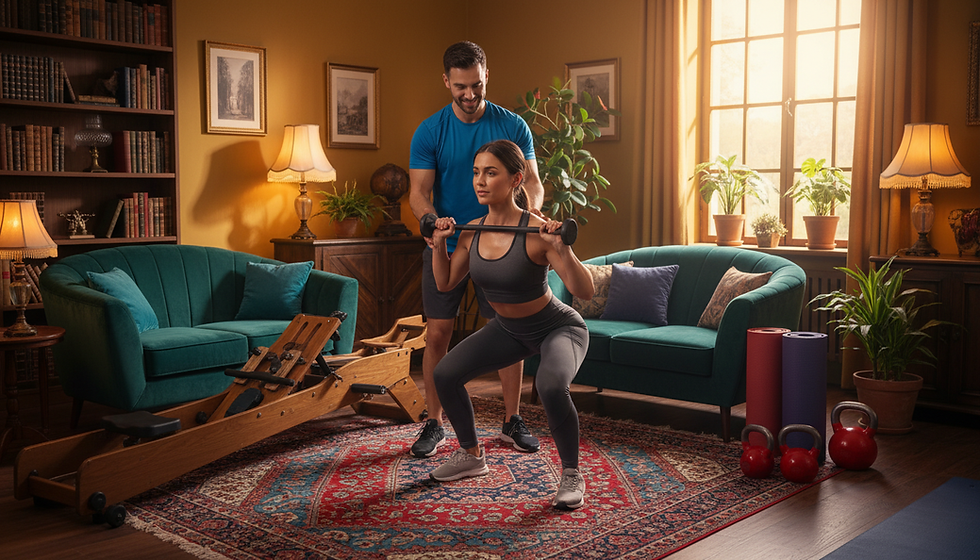
Design Your Environment for Movement: Make your workout gear visible and accessible. Lay out your workout clothes the night before. Keep your resistance bands or small weights in a spot where you can see them. If you have a home gym, make it an inviting space. The less friction there is between you and your workout, the more likely you are to do it.
Visual Reminders: Sticky notes on your mirror, a motivational quote on your fridge, or a reminder set on your phone can all serve as gentle nudges to get moving. These small visual cues keep your intention top of mind.
Make It Attractive: Start with Finding Movement You Enjoy
Let's be honest, if something feels like a chore, we're less likely to do it. The trick here is to make exercise something you genuinely look forward to, or at least something that feels rewarding.
Choose Activities You Genuinely Enjoy: This is perhaps the most crucial piece of advice. If you hate running, don't force yourself to run. There are countless ways to move your body. Explore different activities: dancing, hiking, swimming, cycling, yoga, martial arts, team sports, gardening, or even just playful movement with your kids or pets. When you find something you love, it stops feeling like "exercise" and starts feeling like "fun."
Find a Workout Buddy or Community: Social connection can be a powerful motivator. Working out with a friend, joining a fitness class, or becoming part of an online fitness community provides accountability, encouragement, and a shared experience. It can transform a solitary effort into a joyful social occasion.
Reward Yourself (Appropriately!): After a workout, give yourself a small reward. This could be listening to your favorite podcast, enjoying a relaxing bath, reading a chapter of a book, or spending time on a hobby you love. The key is to choose rewards that reinforce your healthy habits, rather than undermining them.
Reframing Your Mindset: Focus on the Benefits: Instead of thinking, "I have to work out," try reframing it as, "I get to move my body and feel energized!" Focus on the immediate benefits: improved mood, increased energy, reduced stress, clearer thinking. Connect your movement to what truly matters to you; playing with your children/grandchildren, having more energy for your passions, or simply feeling good in your own skin.
Make It Easy: Lowering the Barrier to Entry
When a task feels overwhelming or difficult, our brains naturally resist it. The goal here is to make starting your exercise routine as effortless as possible, removing any friction that might stand in your way.
Start Small – The "Two-Minute Rule": When you're trying to start a new habit, make it so easy that you can't say no. For example, if your goal is to run 30 minutes, your "two-minute rule" might be: "Put on my running shoes." If your goal is to do yoga, it might be: "Roll out my yoga mat." The idea is that once you start, you'll often find the momentum to continue. Even if you only do those two minutes, you've still shown up and reinforced the habit.
Reduce Friction: Think about anything that makes it harder to exercise and try to eliminate it. Is your gym too far? Consider home workouts. Do you struggle with what to do? Follow a pre-planned program or a guided video. Is your equipment hard to access? Keep it out in the open. The fewer steps between you and your workout, the better.
Simplify Decisions: Decision fatigue is real. If you have to decide what to wear, what workout to do, or where to go every single time, it adds mental friction. Pre-plan your workouts for the week. Have your workout clothes ready. Choose a program that tells you exactly what to do. The less you have to think, the easier it becomes.
Gradual Progression: Don't try to do too much too soon. If you haven't exercised in a while, starting with an hour-long intense workout is a recipe for burnout and injury. Begin with short, manageable sessions and gradually increase the duration, intensity, or frequency as your body adapts and gets stronger. Celebrate the small wins and trust the process.
Make It Satisfying: Celebrating Every Step
We are wired to repeat behaviors that bring us satisfaction. When exercise feels rewarding, you're much more likely to stick with it. This isn't just about external rewards, but also about the intrinsic satisfaction of progress and accomplishment.
Track Your Progress: Seeing how far you've come is incredibly motivating! Use a journal, a fitness app, or even a simple calendar to track your workouts, reps, weights, or minutes of activity. Visualizing your consistency and improvements provides tangible proof of your hard work and fuels your desire to continue.
Celebrate Consistency, Not Just Outcomes: It's easy to get caught up in wanting specific results (weight loss, muscle gain). While those are great, it's even more important to celebrate the act of showing up. Every time you complete a workout, no matter how short or easy, you're reinforcing the identity of someone who is committed to their health. Give yourself a mental high-five for your dedication!
Immediate Gratification: Exercise itself offers immediate rewards! The rush of endorphins, the feeling of accomplishment, increased energy, reduced stress, and improved mood are all instant benefits. Learn to tune into these positive feelings and associate them with your movement.
Connect Daily Actions to Long-Term Benefits: Remind yourself why you started. Is it to have more energy for your family? To feel stronger and more confident? To live a longer, healthier life? Connecting your daily efforts to these bigger, more meaningful goals makes each workout feel more purposeful and satisfying.
For those seeking structured support that beautifully integrates these principles, Amanda Boike Fitness Online offers a flexible framework. You can choose 2, 3, or 4 days of strength training per week, and it encourages you to incorporate cardio you genuinely enjoy on your own. This personalized approach helps you build a routine that is both effective and sustainable, making it easier to make fitness a satisfying part of your life.
Your Journey, Your Rules: A Sustainable Path to Well-being
Ultimately, the goal is to design a good daily exercise routine that adapts to your life, rather than forcing your life to adapt to an unrealistic routine. By committing to what is truly reasonable, integrating diverse exercise types, and leveraging these powerful habit-building strategies, you can cultivate a sustainable exercise routine that supports your health and well-being for years to come. Listen to your body, be flexible with your plan when life throws curveballs, and find ways to enjoy the process.
About the Author: Amanda Boike
Amanda Boike is a fitness trainer and the visionary behind Amanda Boike Fitness Online, a platform committed to helping individuals build personalized and sustainable exercise routines. With years of experience in guiding clients toward their health goals, Amanda specializes in creating flexible frameworks that integrate strength training, somatic re-education, and enjoyable cardiovascular activities. She empowers her clients to listen to their bodies, celebrate small victories, and adapt their fitness journey to fit their unique lifestyles, making health and movement an accessible and satisfying part of everyday life.


Comments