
Discover the Unique Benefits of In-Home Personal Training for Women Over 40 vs. Gyms
- Amanda Boike

- Nov 6, 2025
- 8 min read
By Amanda Boike Fitness In-home personal training for women over 40 delivers tailored strength, mobility, and joint-friendly programming in your own environment. This eliminates the commute time, gym intimidation, and combines accountability with professional guidance. Read on to learn what in-home training is, why personalization and somatic methods matter for mature bodies, and how these approaches compare to conventional gym programs.
Why is Strength Training Important for Women Over 40?
In this phase of life, there's no doubt women face time constraints, joint pain, gymtimidation, and/or hormonal shifts that make generic programming ineffective or risky. In-home and thoughtfully designed online options offer practical solutions that prioritize longevity over extremes. In this article, we'll cover:
Learn the key benefits of training at home
How to mitigate the most common gym-related challenges
How strength training after age 40 impacts your health
The science-backed approach we recommend for building muscle (without wrecking your joints)
How you can safely build muscle from home
What Are the Key Benefits of In-Home Personal Training for Women Over 40?
In-home personal training for women over 40 offers focused, personalized sessions that reduce injury risk while accelerating functional strength gains through tailored strength training and movement quality work. By meeting clients where they live, trainers assess daily movement patterns, adapt exercises to real-life demands, and reduce barriers to adherence such as travel and anxiety about public workouts. The result is safer progression, better recovery, and a training rhythm aligned with each client’s schedule and comfort level.
How Do Convenience and Privacy Enhance Fitness for Women?
The key to doing anything consistently is making it easy to do. When workouts happen at home, time spent commuting and preparing is removed, allowing shorter, frequent sessions that still deliver progressive overload. Privacy reduces self-consciousness and gymtimidation, so women are more likely to attempt unfamiliar movements and higher intensities in a safe context. Personal equipment and customized playlists also improve adherence and confidence, which then enable more ambitious strength and mobility goals.
Why Is Personalized, Joint-Friendly Training Crucial for Women Over 40?
By age 40, we have varied histories of injury, hormonal changes, and altered tissue resilience that demand specific strategies. Load management- adjusting intensity, volume, and movement selection- protects cartilage, tendons, and joints while still stimulating muscle adaptation. Movement-quality work, including controlled progressions and neuromuscular re-education, reduces compensatory patterns that cause pain and limit power. For women concerned about sarcopenia or osteoporosis, these personalized approaches ensure that strength gains occur without provoking flare-ups, enabling sustainable progress.
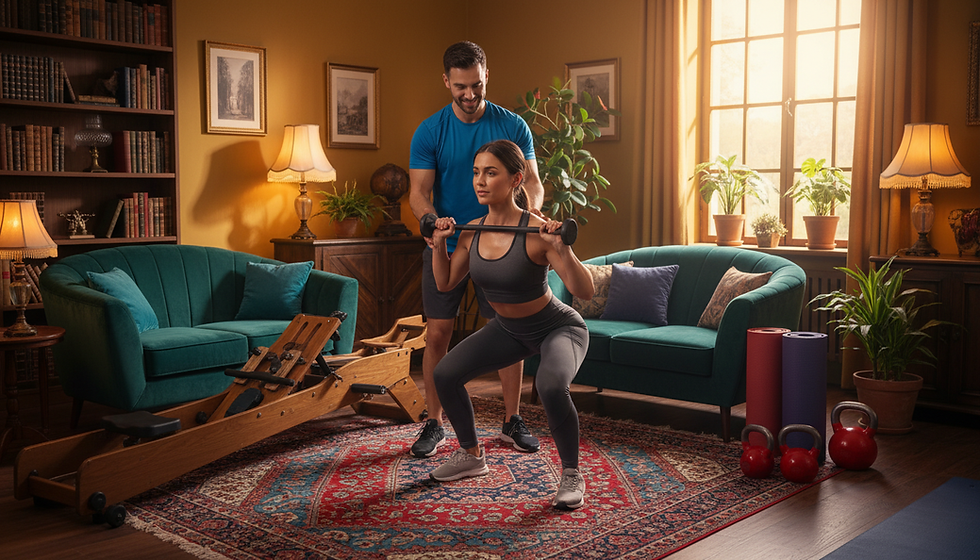
In many cases, an in-home personal trainer like Amanda Boike can design and implement these strategies directly in your living space, making it easy to apply movements to everyday tasks and helps clients feel safer and more supported when progressing.
In-home training improves scheduling flexibility for busy adults.
Privacy reduces psychological barriers to attempting new strength progressions.
Tailored progressions protect joints while enabling measurable strength gains.
What Challenges Do Women Over 40 Face with Gym Workouts Compared to Home Training?
Gyms often come with equipment intimidation and one-size-fits-all programs that overlook joint, hormonal, and recovery differences. Many conventional gym environments feature younger crowds and high-intensity culture that may discourage slower, strength-focused progressions appropriate for mature bodies. Logistical challenges- commute time, crowded classes, and limited trainer availability- reduce consistency and lower the likelihood of long-term adherence. Recognizing these challenges clarifies why in-home and customized online options can be more effective for sustained strength and mobility improvements.
Strength Training for Individuals Over 40: Joint-Preserving Methodologies for Health and Functionality
Strength training represents the most potent strategy for mitigating the physiological effects of aging and preserving bodily health and function. With advancing age, the primary objectives of training shift from merely increasing load to maintaining muscle mass, bone mineral density, and general physiological well-being. Consequently, a training methodology that is joint-friendly yet sufficiently challenging to stimulate adaptation is paramount.
Why Are Generic Gym Programs Less Effective for Mature Women?
Generic gym programs often emphasize high-intensity intervals or standard volume prescriptions without accommodating slower recovery, fluctuating energy around menopause, or persistent joint irritability- factors that become more common after 40. Such programs can increase cortisol, fatigue, and injury risk when not adjusted for individual recovery windows and movement limitations. Effective alternatives prioritize progressive resistance, deliberate recovery, and joint-protective exercise selection with measurable metrics for progression. By switching focus from maximal output to steady, strength-centered adaptation, mature women gain muscle and function without the burnout or setbacks that generic plans can cause.
How Does Strength Training at Home Benefit Women Over 40’s Health and Mobility?
Strength training at home benefits women over 40 by reversing muscle loss, supporting bone density, improving metabolic health, and enhancing functional mobility through targeted, progressive resistance and practical movement practice. Mechanical loading from resistance exercises stimulates muscle protein synthesis and bone remodeling, which counteracts sarcopenia and osteoporosis risks common with aging. Home-based programs can reproduce these stimuli with minimal equipment- bands, dumbbells, step platforms- when properly programmed for progressive overload and recovery. These physiological gains translate into everyday improvements such as safer stair climbing, easier lifting of groceries, and reduced joint pain, making home strength work a potent, accessible health intervention.
To clarify mechanisms and practical approaches, consider the primary physiological benefits listed below.
Prevention of Muscle Loss: Resistance training stimulates muscle growth and maintains strength essential for independence.
Bone Density Support: Weight-bearing and resisted movements promote bone remodeling and reduce fracture risk.
Metabolic Improvement: Increased lean mass raises resting metabolic rate and assists with body-composition management.
Each of these benefits supports long-term health and daily function, which we’ll now explore with specific mechanisms and safe training recommendations.
What Role Does Strength Training Play in Combating Sarcopenia and Osteoporosis?
Strength training combats sarcopenia by applying progressive resistance that stimulates muscle fiber recruitment and development, improving strength and balance. For bone health, targeted loading- especially through multi-joint movements and impact-modified weight-bearing- encourages osteoblastic activity and slows bone loss. Attention to movement quality is paramount and compensatory movement correction is necessary to avoid joint overload. Practical recommendations typically include two to four weekly sessions with progressive sets and reps, using a mix of bilateral and unilateral exercises to build robust, functional strength. These protocols translate to measurable improvements in strength and bone markers when adhered to consistently.
How Can Strength Training Manage Menopause Symptoms and Boost Metabolism?
Strength training helps manage menopause-related changes by preserving lean muscle mass, which supports metabolic rate and reduces central fat accumulation commonly associated with hormonal shifts. Resistance exercise can also improve mood, sleep quality, and energy levels, aiding in symptom management. Sustainable, moderate-intensity programs with adequate recovery are more effective and less disruptive than extreme regimens that elevate stress hormones. Combining strength sessions with mobility work and lifestyle practice- sleep, nutrition, stress management- creates a multi-faceted strategy that improves both metabolic health and day-to-day quality of life.
How Does Amanda Boike’s Science-Meets-Somatics Approach Improve Joint Health and Mobility?
Amanda Boike’s science-meets-somatics approach blends the Feldenkrais Method with biomechanics to emphasize movement awareness, alignment, and evidence-based load progression—resulting in safer, more efficient strength and mobility gains for women over 40. By combining somatic education with biomechanical assessment, this method addresses both nervous system control and mechanical stress distribution, reducing compensations that commonly lead to joint pain. Sessions prioritize movement quality before load, so strength gains build on efficient patterns that transfer to daily life. This hybrid approach produces measurable improvements in joint comfort and functional capacity while minimizing injury risk.
Briefly, the in-home service model enables direct application of these methods in the environment where clients live and move, allowing coaches to tailor strategies to real-world tasks and ensure carryover to daily activities. For readers considering deeper support, discover and purchase in-home personal training services, or online programs.
How Does Biomechanics Enhance Safe and Effective Strength Training for Women Over 40?
Biomechanical assessment identifies inefficient alignment, joint loading asymmetries, and movement patterns that concentrate stress on vulnerable tissues, allowing specific corrective cues and exercise substitutions to redistribute forces. Principles such as maintaining neutral joint alignment, optimizing lever lengths, and sequencing muscle activation reduce strain while improving force output. For example, adjusting foot position, hip hinge depth, or grip width can preserve joint integrity while allowing progression in load. When biomechanics guide exercise selection and progression, women over 40 can pursue meaningful strength gains with lower injury risk and more reliable functional carryover.
How Do ABF Online Programs Support Effective Muscle Building from Home for Women Over 40?

ABF Online programs offer structured progressions, modification options, and a joint-friendly exercise selection to produce meaningful muscle and strength gains at home while recognizing trade-offs in customization. Online programs are less customized, but still effective for building muscle from home. Well-designed online protocols provide clear progression models (e.g., weekly load or rep targets), low-impact exercises for joint issues, and accessible equipment standards that make consistent overload achievable. With disciplined adherence and appropriate modifications, online training can stimulate hypertrophy and functional improvements similar to in-person work, though clients with complex movement limitations may benefit from supplemental in-home coaching for finer biomechanical adjustments.
What Makes ABF Online Programs Suitable for Women Over 40?
ABF Online programs prioritize progressive overload with accessible equipment, built-in modifications, and pacing strategies that match recovery needs- factors that suit many women over 40. Program design emphasizes sustainable strength increases rather than extreme intensity, incorporating options to reduce joint load while preserving stimulus. Clear progression markers and scaling guidance enable users to track incremental gains and adjust as energy and recovery fluctuate. These design choices help mitigate common barriers like limited equipment and time constraints, making muscle-building both feasible and safe at home.
What Success Stories Demonstrate the Impact of In-Home Personal Training for Women Over 40?
Real-world client outcomes show that targeted in-home training and structured online programs produce measurable gains in mobility, strength, and daily function for women over 40 when programs focus on movement quality and progressive overload. Case examples commonly report reduced joint pain, regained confidence to perform household tasks, noticeable positive changes in posture, and quantifiable strength improvements such as easier stair climbing or increased carrying capacity. These outcomes reflect the cumulative effect of consistent, tailored work and illustrate why a combined focus on somatics and biomechanics is effective.
What are people saying about at-home personal training in Chicago with Amanda Boike Fitness?
"As a 60-something person in a physically taxing job, I really can not afford any setbacks, but she also pushes me, sometimes beyond what I think I can do. Yet in over a year, I have never once been injured or even overly sore. This is a big deal for me in being able to do my work.... She is really changing my sense of what is possible in terms of thriving as I get older." -Kathleen C.
"I highly recommend Amanda! The results I've had have blown past my expectations of what I thought was possible. Amanda is incredibly skilled at diagnosing your body mechanics depending on your goals. I've never felt healthier and I've been active most of my adult life." - Candice S.
"I did the four classes last week and trying to get four in again this week. I have never worked with weights before. I am really liking the structure of the classes. It is perfect for me. Not too much, but does stimulate my muscles. It feels really good. Thank you." -Marjory B
How can I start working with an in-home personal trainer in Chicago?
Contact us here and let us know you are interested. We'll get back to within 24 hours!


Comments